
Reviewed by Dr. Avy Ariyev, DDS · Smile Studio of Great Neck
Short answer: bonding is quicker and cheaper, and it’s great for small chips and gaps. Porcelain veneers cost more, $1,795 to $2,200 per tooth at our office, but they usually last longer, resist stains, and can change the color, shape and size of several teeth at once. Which one is right really comes down to how much you want to change.
What’s the real difference between them?
It’s one of the most common questions we hear in consultations, and it makes sense. Both can fix chips, close gaps and make teeth look more even. The difference is in how they’re made and how long they hold up.
Bonding is resin that’s shaped right on your tooth, usually in one visit. Veneers are thin shells of porcelain made to fit the front of your teeth, and they normally take two or three visits.
Bonding tends to last about 5 to 10 years and can pick up stains over time. Porcelain veneers often last 10 to 15 years or more and stay bright. Bonding needs little or no removal of enamel. Veneers usually mean taking off a thin layer of enamel, and that can’t be undone, which is worth thinking about.
When does bonding make more sense?
If you’re fixing one or two teeth, a small chip or a small gap, and you’d like it done in a single appointment, bonding is usually the way to go. It’s also a nice option if you aren’t ready to commit to veneers yet. You can read more on our dental bonding page.
When are veneers worth it?
Veneers are usually the better choice when you want a bigger change, like brighter, more even teeth across your whole smile. They also make sense if you’ve had bonding before and it keeps chipping or staining. Our porcelain veneers page walks through the process, and the ADA has a helpful veneers overview.
Will veneers look fake?
Not when they’re planned carefully. A lot of people picture the overly white, too-perfect look. Dr. Ariyev matches the shape and shade to your face and your other teeth, and you’ll see the plan before anything is made.
Can you mix the two?
Yes, and plenty of people do. Some patients get veneers on the front teeth everyone sees and use bonding for a small chip further back. If you’re planning either one, whitening first helps everything match.
What happens at the consultation?
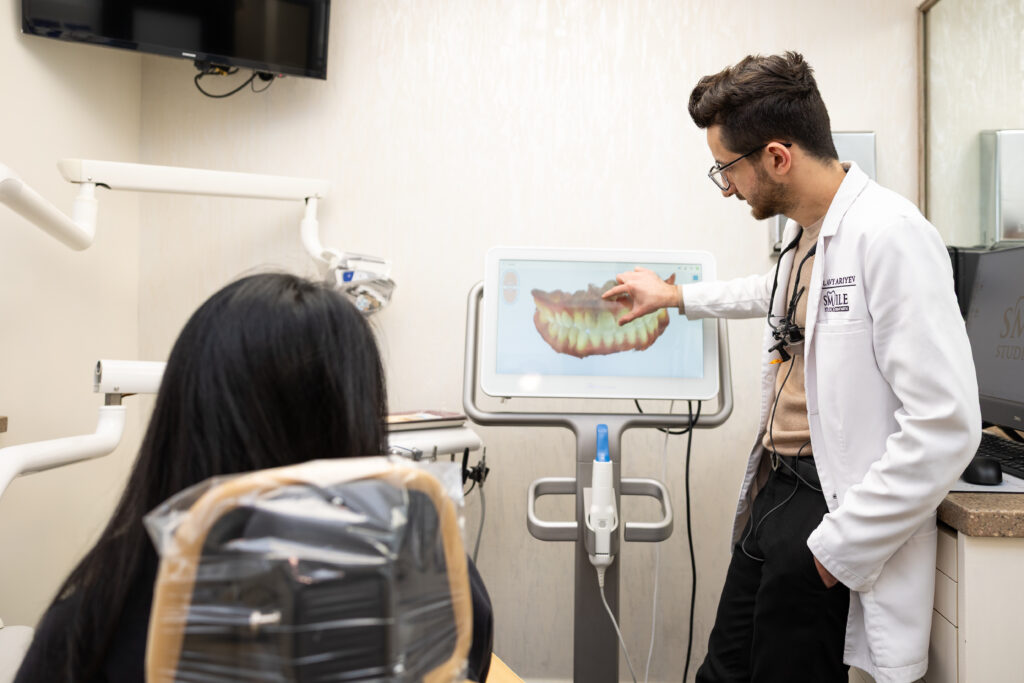
Dr. Ariyev looks at your teeth, gums and bite, and asks what you’d actually like to change. He’ll often take an iTero digital scan so you can see your teeth in 3D on the screen, which makes it much easier to talk about. Then he’ll explain whether bonding, veneers, whitening or a mix makes sense, how many visits each takes, and what it costs. You’ll leave with a written estimate and there’s no pressure to decide on the spot.
Which costs less in the long run?
Bonding costs less up front, but it may need touch-ups or replacing sooner. Veneers cost more at the start and get replaced less often. Over 10 to 15 years, the gap isn’t always as big as it first looks. We’re happy to sketch out both so you can decide what fits your budget.
How do you look after either one?
The same habits help both. Avoid biting your nails, chewing ice, or opening packages with your front teeth. Wear a mouthguard for contact sports and a night guard if you grind. Keep your cleanings twice a year so we can check the edges and polish away stains.
Frequently asked questions
Which lasts longer, veneers or bonding?
Porcelain veneers usually do, often 10 to 15 years or more compared with about 5 to 10 for bonding.
Can I switch from bonding to veneers later?
Yes. Bonding can be removed and replaced with veneers whenever you’re ready.
Does insurance cover veneers?
Veneers done for appearance usually aren’t covered. Our membership plan may offer savings on cosmetic work.
Want to see both options on your own teeth? Book a cosmetic consultation at Smile Studio of Great Neck or call 516-487-3655.
Individual results vary. Prices are estimates; your exact cost is confirmed in writing at your consultation. This article is general information and isn’t a substitute for an exam.